Plugin updates do not maintain a WordPress site. That statement will annoy the agencies who've been handing clients an "update all" workflow and calling it a care plan — but annoyance isn't the same as being wrong.
The myth baked into most agency models is that maintenance is either too complex to deliver profitably or too low-margin to bother with. Neither is true. The real problem is that most agencies have never productized it properly, so it lives in a grey zone between projects — underbilled, underscoped, and undervalued.
That grey zone is where recurring revenue goes to die.
The Myth: Maintenance Is Too Complex to Productize
This is the belief that keeps agencies stuck on the project hamster wheel. They build, hand off, and move on — then spend a year fielding reactive support requests from clients who don't have a maintenance plan.
The irony is that agencies are the most qualified people to sell WordPress maintenance. They know the codebase. They configured wp-config.php. They know which plugins are fragile and which ones have abandoned GitHub repos. That operational knowledge is exactly what makes maintenance valuable — and it's exactly what a client cannot replicate themselves.
What agencies lack isn't knowledge. It's a productized offer.
Productizing maintenance means defining a fixed scope, a fixed monthly price, a response SLA, and a delivery system. It stops being a fuzzy ongoing service and becomes a sellable plan with clear value on both sides. The product is the certainty, not just the labor.
Most agencies skip this step because productizing requires upfront thinking — writing scope documents, defining SLAs, building a consistent delivery workflow. That investment feels like overhead. It isn't. It's the architecture of a revenue line that runs whether or not you're actively selling new projects.
What You're Actually Selling (Under the Hood)
Before you build a pricing tier, understand what maintenance actually involves at a technical level. This matters for pricing, for scoping, and for explaining value to clients who think their host handles it.
Staged, tested updates — not click-and-pray
Legitimate plugin and theme updates run through a staging workflow before they touch production. You verify compatibility, check for broken layouts or failed functionality, and confirm the rollback strategy if something misfires. Plugin abandonment risk is a real factor here — part of ongoing maintenance is flagging plugins that haven't shipped an update in 6+ months and appear in vulnerability databases. In most audits we perform, at least one or two plugins on any given site qualify as functionally abandoned. That's a security liability nobody told the client about.
Database hygiene
The wp_options table accumulates orphaned data from deactivated plugins, uncleared transients, and accumulated autoload weight. Left unmanaged, this creates measurable query overhead that degrades site performance incrementally. Database indexing matters. Post revision bloat matters. Most clients have no visibility into any of it — and most hosts don't touch it either.
Security posture maintenance
This isn't "install Wordfence and move on." It includes .htaccess hardening, REST API exposure auditing, file permission checks, and active malware scanning. In most hacked site recoveries, the initial compromise happened weeks before anyone noticed. Proactive monitoring closes that gap. Reactive cleanup doesn't — it just deals with the damage after the fact.
Performance and system health monitoring
Object cache configuration, cron job health checks, and slow query identification through Query Monitor diagnostics. Performance isn't a launch-day attribute — it erodes as traffic grows, plugin count increases, and content accumulates. PHP version compatibility also becomes a recurring concern as hosts upgrade server environments and surface plugin conflicts that nobody tested for. A site that runs clean on PHP 8.1 may behave unexpectedly when the host silently upgrades to 8.2 and two plugins haven't caught up with the change.
Uptime monitoring and incident response
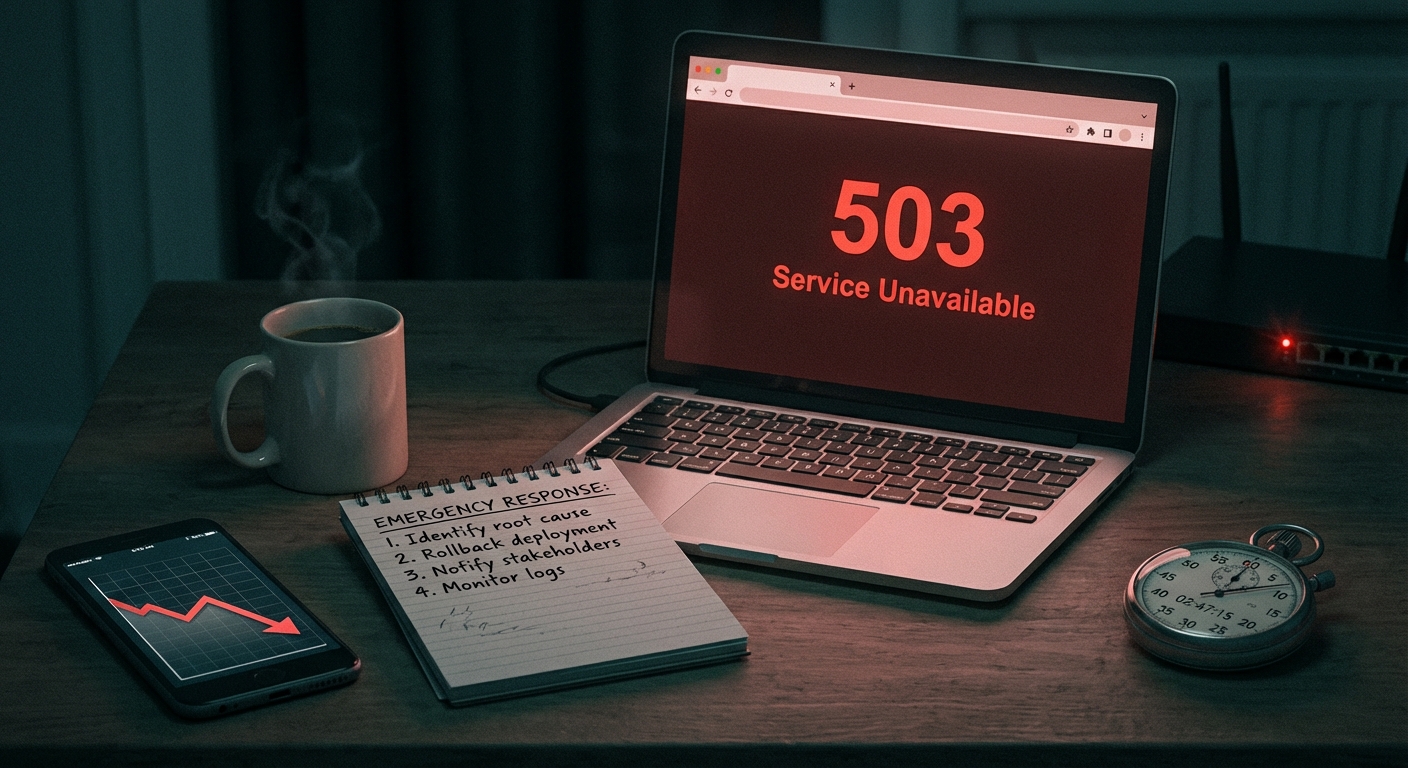
For a WooCommerce store averaging $4,000/day in revenue, that's roughly $167 per hour of downtime. Emergency recovery without a maintenance relationship in place typically costs $300–$800 in reactive billable time — plus the cost of the downtime itself. A proactive plan eliminates most emergencies and resolves the rest faster because the responder already knows the site.
That's the actual service. Once you understand the scope technically, pricing stops feeling arbitrary.
The Consequences of Not Selling This
When you build a WordPress site and hand it over without a maintenance agreement, several things happen — all predictably.
The client manages updates manually, inconsistently, and without a staging workflow. Eventually something breaks. They call you. You fix it on an ad-hoc basis for a few hours at a rate that doesn't reflect the urgency or your expertise. Everyone is frustrated.
Or they don't call you. They find someone on Fiverr. That person makes changes without documentation. The site degrades further. You get blamed when they come back wanting a redesign because "the old site was always breaking."
Neither outcome is good for you or for your client relationship.
Now run the math on what you're leaving behind. If you have 30 past clients and none of them are on a maintenance plan at even $100/month, that's $3,000/month in predictable, repeatable revenue you're currently not collecting. Across 12 months, that's $36,000 you've effectively donated to reactive chaos.
Project-based clients churn. Maintenance clients compound.
The retention effect is worth naming explicitly. Clients on a maintenance plan have an active ongoing relationship with your agency. They don't shop around for a new developer when they want to add a feature. They don't forget your name between projects. You become infrastructure — not a vendor they call when something breaks. That positioning is worth more than the monthly fee itself.
And when you factor in the referral dynamic, the economics improve further. Retained maintenance clients refer at a higher rate than project clients who've moved on. A stable base of 20–30 maintained sites is not just recurring revenue — it's a referral engine that generates new project leads consistently. The maintenance plan is the relationship vehicle. Everything else flows from it.
The White-Label Model: Deliver Without Overextending
Here's where agencies stop themselves. Delivering consistent maintenance across dozens of client sites requires systems — monitoring dashboards, staging environments, update workflows, security scanning tools, and someone available for incident response. Building that infrastructure from scratch while running an agency is a real operational cost.
White-label WordPress maintenance solves this directly.
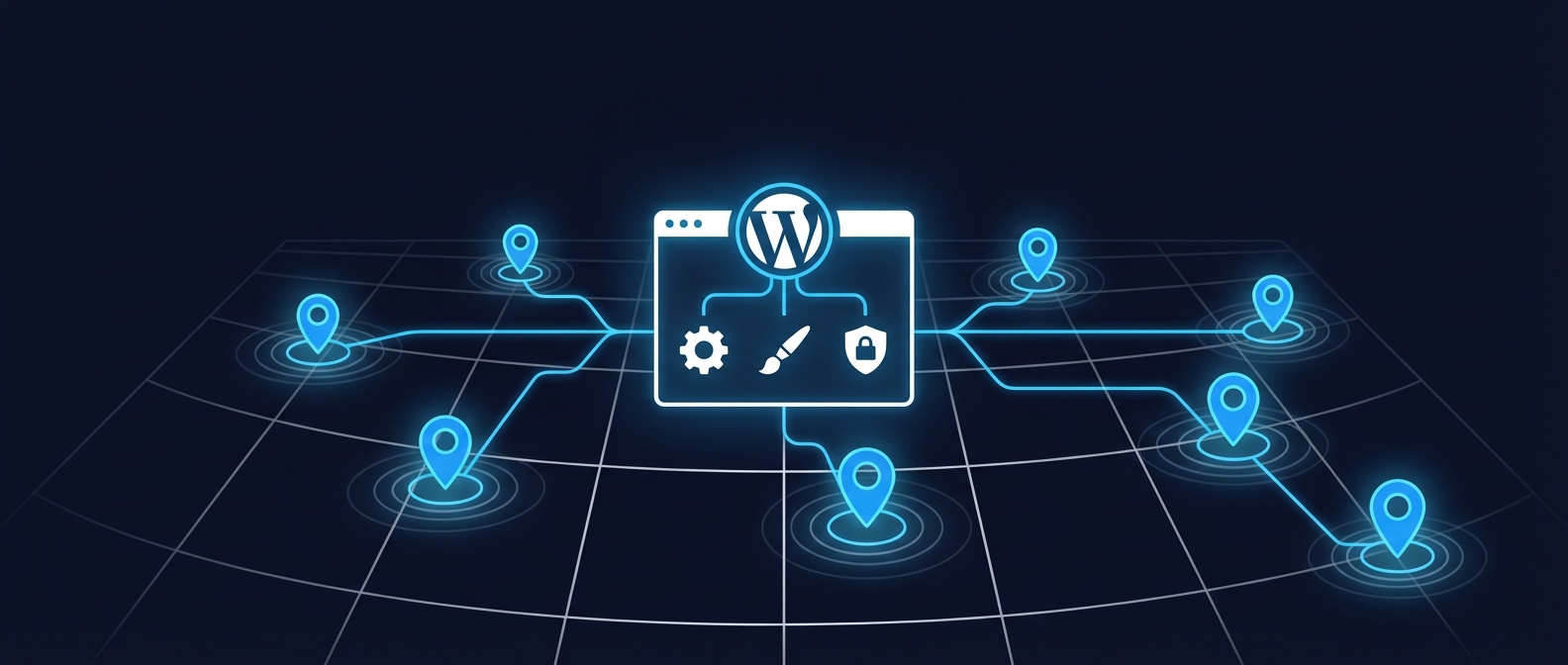
You sell the plan under your agency's brand. A white-label provider handles the operational backend — updates, monitoring, database maintenance, security audits, reporting. You receive branded reports to forward to clients. You keep the margin. The client relationship stays entirely with you.
The unit economics are straightforward. If you resell a maintenance plan at $149/month and your wholesale cost is $75/month, you're clearing $74/month per client. Across 20 active maintenance clients, that's $1,480/month in recurring margin from a service you don't directly deliver. Across 40, that number doubles without adding headcount.
The complexity doesn't scale with the revenue. That's the structural advantage of the white-label model.
You can see how Vimsy structures its white-label WordPress maintenance services for agencies that want to add this revenue line without building the fulfillment stack themselves.
How to Price Your Plans
Three tiers. No more complexity than that.
Tier 1 — Essential ($79–$99/month) Core updates, automated backups, uptime monitoring, monthly status report. Designed for simple informational sites with low traffic and low revenue risk.
Tier 2 — Standard ($149–$179/month) Everything in Tier 1 plus staged-update workflow, database optimization, transient cleanup, security scanning, and 48-hour priority support response. This is the right tier for most small business sites.
Tier 3 — Premium ($299–$499/month) Full-stack: everything above plus performance auditing, Query Monitor diagnostics, cron job health monitoring, REST API hardening, PHP version compatibility checks, and a defined emergency response SLA. Built for WooCommerce stores and high-traffic sites where downtime is directly measurable in lost revenue.
When presenting pricing to clients, anchor against the alternative cost. A single malware cleanup or botched-update recovery typically costs $300–$800 in reactive hours. Your Standard plan at $149/month pays for itself if it prevents one emergency every two months — and it will prevent far more than that.
Don't position maintenance as a cost. Position it as the thing that makes the investment in the site worth protecting.
For a detailed view of what each maintenance tier covers operationally, this WordPress maintenance checklist breaks it down at a task level.
Building the Productized Offer
Here's the practical framework for turning this into a sellable product:
Name the plan. "Monthly Site Care Plan" or "SiteGuard Pro" — something that sounds like a product, not a loose arrangement. Named offers get taken more seriously and are easier to reference on proposals and invoices.
Write an explicit scope document. List exactly what runs every month. Clients don't pay for ambiguity. They pay for a clearly defined set of operations and a point of contact when something goes wrong.
Define what is explicitly out of scope. Design changes, new features, content updates — these are separate project agreements. This protects your margin and prevents scope creep from eating your recurring revenue.
Define your response SLA. "Critical site-down issues addressed within 4 business hours." Specificity builds confidence. Vague promises don't.
Automate billing. Recurring revenue should run on autopilot. Use Stripe, WooCommerce Subscriptions, or any subscription billing tool that doesn't require manual invoicing every month. Manual billing is a recurring administrative tax that compounds badly at scale.
Pitch it at handoff. The best moment to introduce a maintenance plan is immediately after project launch — when the client is engaged, grateful, and acutely aware that they don't want to manage this themselves. That window closes fast. Wait three months and you're pitching a service they don't feel they need yet, against a problem they haven't experienced yet.
The Objection You'll Hear Most Often
"My host takes care of this."
No. Managed hosting handles server infrastructure. It does not handle application-layer maintenance.
Hosts patch their own environments. They update PHP on the server. They don't test your plugin stack against that PHP upgrade before it breaks your client's WooCommerce checkout. They don't clean up your wp_options table. They don't monitor your cron jobs. They don't respond to a corrupted database at midnight.
That's not maintenance. That's infrastructure — and confusing the two is exactly how sites break in ways that catch everyone off guard.
When you hear this objection, don't argue. Reframe: "Managed hosting keeps the server running. Our plan keeps the application running, secured, and optimized."
Then let the client decide whether those are the same thing. They're not, and most business owners understand the distinction once it's drawn clearly.
Stop Leaving Predictable Revenue Behind
Every WordPress site you've ever launched is accumulating technical debt right now. Plugins are aging. The wp_options table is bloating. Transients are accumulating. PHP environments are drifting out of compatibility. And none of your former clients have a system in place to deal with any of it.
That's a problem you already know how to solve. The only thing missing is a priced, scoped, deliverable offer and a fulfillment model that doesn't require you to hire a new developer for every ten clients.
The white-label model gives you both.
Look — I'm writing this because this is a problem I see constantly, and it's also exactly what we built Vimsy to solve. If you want professionals handling this instead of hoping nothing breaks, book a free call.
Check out Vimsy's pricing and see what the partnership economics look like for your agency. The math is straightforward. The decision should be too.